

Views: 0 Author: Site Editor Publish Time: 2025-12-12 Origin: Site


The procurement of heavy equipment is a high-stakes decision, especially in the competitive compact machinery segment. For any contractor or fleet manager specializing in utility, landscaping, or urban development, the choice between a tracked and a wheeled machine is pivotal to maximizing profitability. This in-depth analysis focuses on the Mini Excavator segment, dissecting the performance, advantages, disadvantages, and the critical Total Cost of Ownership (TCO) of the two primary types: the Mini Tracked Excavator and the Small Wheel Excavator.
As the global Mini Excavator market continues its growth surge in 2025—driven by urbanization, infrastructure renewal, and the need for compact, highly maneuverable machines—understanding the nuanced differences between these two platforms is more crucial than ever.
Before diving into the technical specifications, it is important to note the major trends influencing machine design and buying intent:
Rental Market Dominance: The increasing shift towards renting demands Mini Excavator models that are exceptionally durable, easy for multiple operators to use, and feature a lower TCO.
Compact Power: Zero-tail swing designs and ever-smaller models (down to 1–2 tonnes) are gaining market share, emphasizing maneuverability for dense urban sites—a factor that plays heavily into the wheel vs. track debate.
Eco-Friendly Focus: The push for sustainability means more electric and fuel-efficient diesel models. For a Small Wheel Excavator, better fuel economy during transit adds a measurable green benefit.
Telematics Integration: Both the Mini Tracked Excavator and Small Wheel Excavator are now highly connected, using real-time data to track performance and maintenance needs, enabling predictive maintenance that directly impacts long-term cost analysis.
The Mini Tracked Excavator, also frequently referred to as a Mini Crawler Excavator, is the traditional and most widely sold type of compact machine. It is engineered for stability, traction, and raw power on adverse ground conditions.
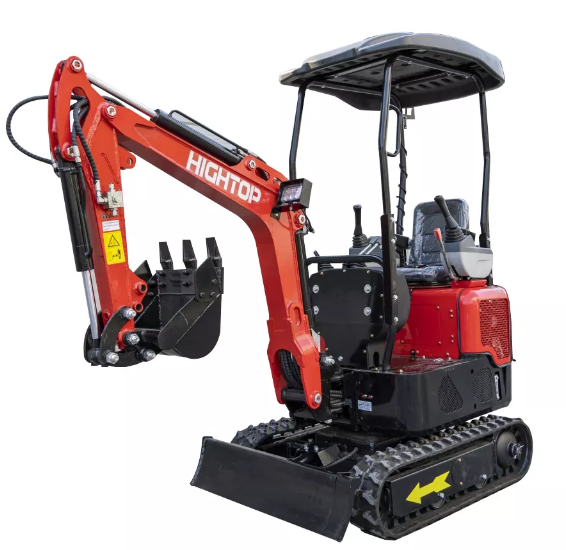
Superior Ground Contact and Low Pressure: The fundamental advantage of a Mini Excavator on tracks is its massive footprint. The tracks distribute the machine's weight over a larger area, resulting in significantly lower ground pressure (measured in pounds per square inch or kPa). This low pressure enables the Mini Crawler Excavator to "float" over soft, muddy, or sandy terrain where a wheeled machine would quickly sink.
Unmatched Stability on Slopes: The lower center of gravity, coupled with the wide base of the tracks, gives the Mini Tracked Excavator far greater inherent stability, particularly when operating on slopes (up to the standard 30-degree incline limit) or lifting heavy loads over the side. The track grousers provide superior traction to prevent slippage.
Enhanced Digging Power and Precision: The machine is solidly anchored, minimizing chassis movement during heavy digging or while operating powerful attachments like hydraulic breakers. This stability translates directly into more efficient breakout force and greater precision for final grading operations.
Minimal Turf Damage (with rubber tracks): When fitted with rubber tracks, the Mini Crawler Excavator minimizes damage to finished landscaping, asphalt, and concrete compared to steel tracks or even the cutting action of standard tires on soft ground. This makes the Mini Excavator an ideal tool for residential and commercial landscaping.
Slower Travel Speed: The tracked design limits travel speed to typically 4 to 6 km/h (2.5 to 3.7 mph). Any distance traveled between jobsites requires a separate haul truck and trailer, adding significant time and logistics cost.
Higher Undercarriage Maintenance Costs: This is the biggest factor in the TCO. The complex undercarriage—including tracks, sprockets, idlers, and rollers—is constantly subjected to abrasive wear. Replacing a set of rubber tracks on a Mini Excavator can be a recurring high expense, often costing several thousand dollars and requiring significant downtime.
Potential for Surface Damage: While rubber tracks are better than steel, heavy, repeated travel by a Mini Crawler Excavator on finished, pristine asphalt or concrete can still cause some surface marring and accelerate wear.
The Small Wheel Excavator—often referred to as a "tyred" Mini Excavator—is the specialist machine built for rapid movement and urban application. While often seen as niche in some markets, its utility in municipal, roadwork, and utility projects is undeniable.
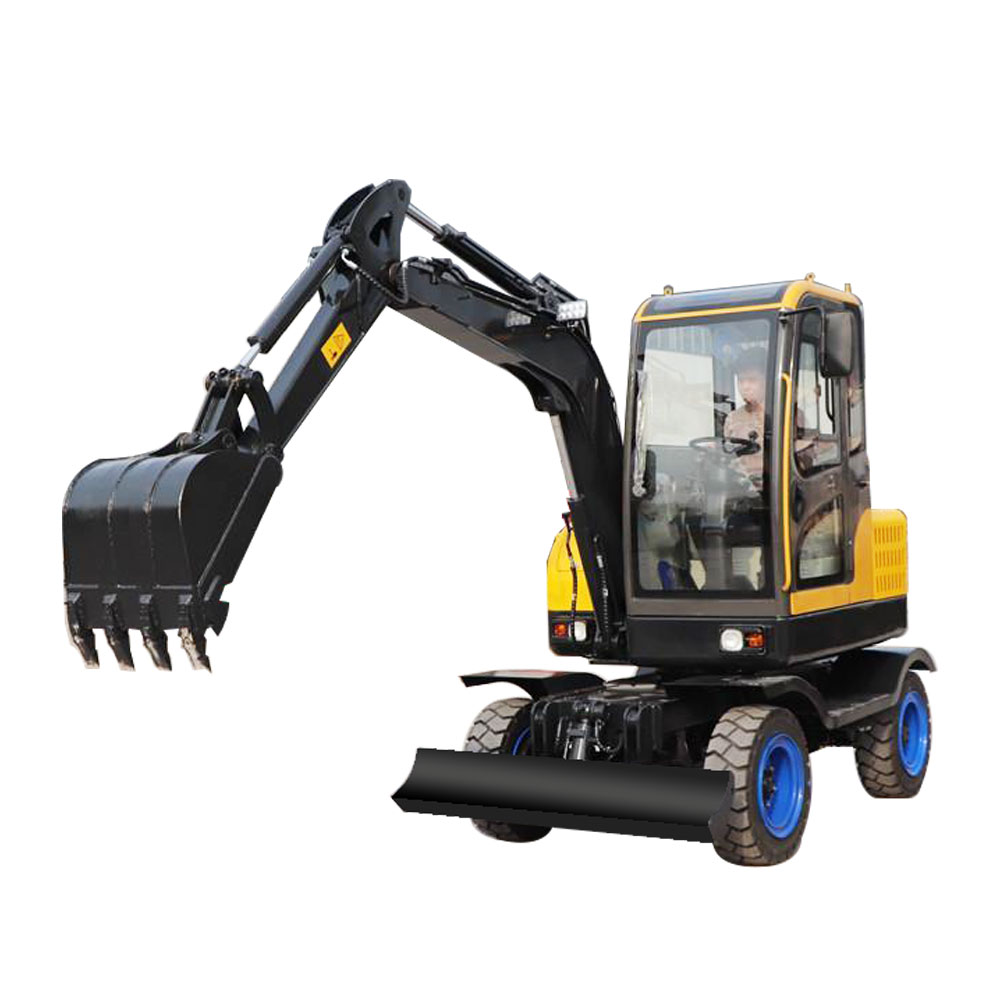
Exceptional Mobility and Speed: The main selling point is the ability to travel quickly between job sites. The Small Wheel Excavator can achieve road speeds typically between 25 and 35 km/h (15 to 22 mph). This self-transit capability eliminates the need for expensive trailers and driver hours, making it highly productive for projects involving multiple, scattered locations within a city or county.
Lower Undercarriage and Maintenance Costs: Compared to the tracks of a Mini Tracked Excavator, the tires and drive axles of a Small Wheel Excavator have a simpler, less expensive maintenance profile. Tires generally last much longer than tracks on paved surfaces, leading to lower overall parts and labor costs over the machine's lifespan.
Road-Friendly Operation: Tires do not damage asphalt or concrete surfaces, making the Small Wheel Excavator the clear choice for working on finished roads, parking lots, and city streets. It is the preferred Mini Excavator for public works where minimizing surface disruption is mandated.
Versatility as a Tool Carrier: Modern Small Wheel Excavator models are often equipped with front-mounted quick couplers, allowing them to function effectively as versatile tool carriers, handling tasks like moving concrete barriers or sweeping in addition to standard digging.
Reduced Traction and Flotation: On soft ground, mud, or steep, unpaved slopes, a Small Wheel Excavator lacks the necessary traction and high flotation capability. The concentrated weight on four tires leads to high ground pressure, increasing the risk of getting stuck or causing deep ruts.
Stability Dependent on Outriggers: To achieve the required stability for heavy lifting or maximum breakout force, the Small Wheel Excavator must deploy its hydraulic stabilizers (outriggers) and/or lower its dozer blade. This setup process adds time compared to the instant stability of a Mini Crawler Excavator.
Higher Initial Purchase Price: Historically, the Small Wheel Excavator has a higher initial list price than a similarly sized Mini Tracked Excavator due to the complex axles, transmission, and braking systems required for road travel.
The decision between a Mini Tracked Excavator and a Small Wheel Excavator must be grounded in a rigorous Total Cost of Ownership (TCO) calculation, factoring in both purchase price and long-term operational costs.
Cost Component | Mini Tracked Excavator | Small Wheel Excavator | Impact on TCO |
Initial Purchase Price | Lower | Higher | Wheel typically requires higher initial capital. |
Undercarriage Maintenance | High (Frequent track replacement) | Low (Less frequent tire replacement) | Tracked significantly increases long-term maintenance costs. |
Transportation Costs | High (Requires separate truck/trailer) | Low (Self-drive capability) | Wheel drastically reduces non-productive fleet logistics costs. |
Operator Fatigue/Comfort | High (Smoother ride on rough ground) | Moderate (Higher cab position, potentially bumpier ride) | Tracked may reduce operator downtime and increase productivity. |
Resale Value | Very High (Broad, universal market demand) | Moderate-High (Niche demand, depends on local market) | Tracked offers generally better and faster capital recovery. |
A key finding for 2025 is the impact of telematics on maintenance. Both platforms benefit from sensors that track engine health, but the Mini Tracked Excavator undercarriage still remains the highest variable cost.
Undercarriage Life: A high-quality rubber track on a Mini Crawler Excavator may last 1,200 to 1,800 hours. Industrial tires on a Small Wheel Excavator can last 3,000 to 5,000 hours on paved surfaces.
Downtime Cost: Unplanned downtime due to track derailment or failure on a Mini Tracked Excavator can cost thousands of dollars per day in lost productivity—a risk largely avoided by the simpler drive system of a wheeled machine.
Road Transit Savings: For a utility contractor moving between 10 sites per week, the Small Wheel Excavator can save 5-8 hours of non-productive loading/unloading/transit time weekly. This equals hundreds of hours of additional billable work per year, providing a massive return on investment.
Ultimately, the best Mini Excavator for your business is the one that aligns perfectly with the majority of your project requirements.
Choose the Mini Tracked Excavator (or Mini Crawler Excavator) if: Your primary work involves rough, uneven terrain, soft ground, steep slopes, heavy-duty excavation tasks, or projects requiring maximum stability and lifting capacity without frequent site changes. This is the traditional workhorse Mini Excavator.
Choose the Small Wheel Excavator if: Your operations are predominantly in urban environments, involve frequent travel between paved job sites, focus on road maintenance, or if minimizing long-term transportation costs and undercarriage maintenance is your highest priority.
By using this data-driven comparison, you can move past brand preference and make a strategic fleet decision that guarantees operational efficiency and a stronger financial outlook for your construction business.
While engine and hydraulic life are similar, the undercarriage life varies significantly. On abrasive ground, a Mini Tracked Excavator may require rubber track and component replacement every 1,500 hours of operation. The industrial tires on a Small Wheel Excavator, when primarily used on pavement, can easily last 3,000 to 5,000 hours, drastically lowering the routine maintenance frequency and cost.
Road legality varies by country, state, and size class. In many jurisdictions, a Small Wheel Excavator is road-legal provided it meets specific requirements for lighting, braking, and width, and the operator holds the appropriate license (often a standard driver's license with a heavy equipment endorsement). A Mini Tracked Excavator is almost never road-legal and requires trailering.
While the Small Wheel Excavator has a higher center of gravity than a Mini Tracked Excavator (due to the wheels and higher frame), modern designs incorporate safety features. It is perfectly safe when operated according to guidelines, which include using outriggers/stabilizers for all heavy lifting and digging, and strictly adhering to the manufacturer's maximum slope operating angle.
The Mini Tracked Excavator is generally better for this task. Many Mini Crawler Excavator models come with retractable undercarriages that can narrow the machine's width to fit through gates (as narrow as 700mm or 28 inches), a feature rarely available on the wider-stance Small Wheel Excavator. The tracks also provide better traction for maneuvering in tight, soft spots like a backyard.
In markets where the Small Wheel Excavator is less common (like some parts of North America), the rental rate can sometimes be higher than that of a ubiquitous Mini Tracked Excavator. However, because the wheeled unit saves the renter the cost of trailer rental and transport fees, the effective job cost of the Small Wheel Excavator often turns out to be lower for short-term, multi-site projects.


