


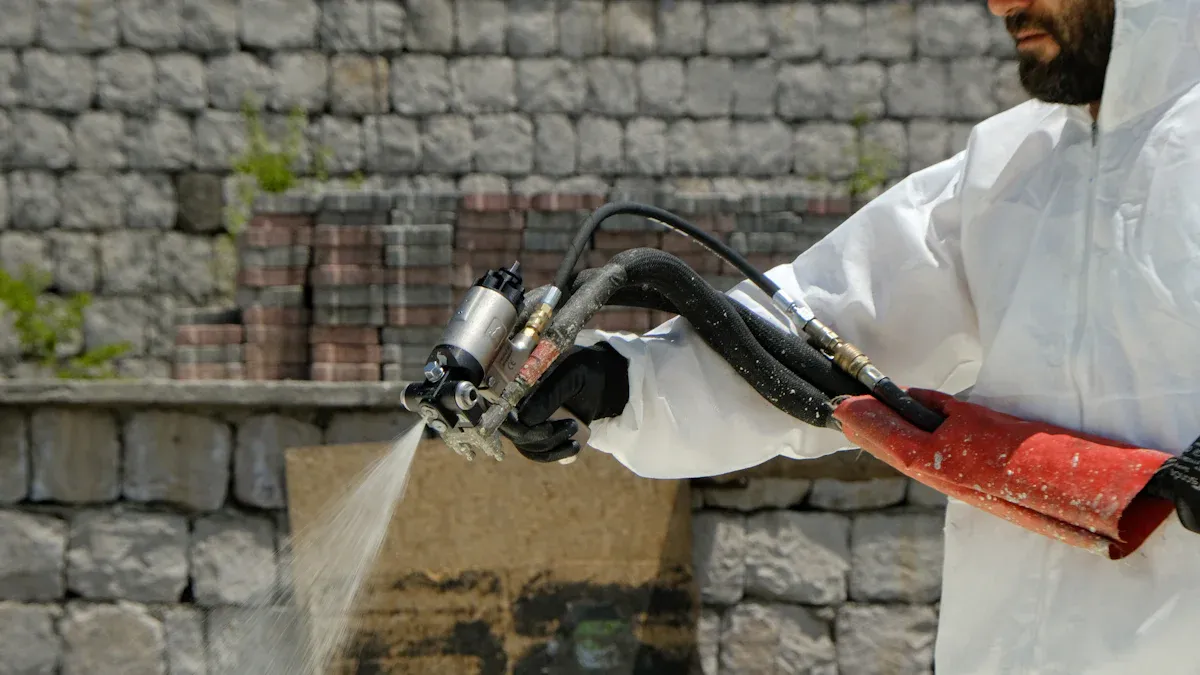
Spray foam is a chemical that helps insulate and seal homes. You can spray it on walls, ceilings, and floors. It makes a strong barrier to stop air and water from getting in. People use spray foam because it keeps rooms comfy and can lower energy costs.
Reason for Preference | Spray Foam Insulation | Traditional Insulation |
|---|---|---|
Energy Efficiency | Saves more energy | Does not save as much energy |
Air Sealing | Blocks air completely | Lets air move through |
Moisture Control | Keeps out water and controls dampness | Soaks up water and stops working well |
Space Optimization | Works well in less space | Needs more space |
Long-Term Durability | Stays the same over time | Can droop or break down |
Compliance with Building Codes | Follows and beats rules | Might not follow new rules |
Many people like spray foam because it seals tight, controls dampness, and saves space.
Spray foam insulation makes a strong wall that blocks air and water. This helps your home use less energy and feel more comfortable.
You can pick open-cell or closed-cell spray foam. Open-cell is good for stopping noise. Closed-cell keeps out water better.
It is best to have a professional install spray foam. They know how to do it safely and well. Professionals do a better job than trying it yourself.
Spray foam insulation can lower your energy bills by up to 20%. It also keeps the air inside cleaner by blocking things that cause allergies.
Check for damage often to keep spray foam working well. Spray foam can last for many years with little care.
You apply spray foam as a liquid. The installer uses a spray gun to mix two chemicals right at the nozzle. This starts a reaction that makes the foam expand quickly. The foam fills gaps, cracks, and cavities in walls, ceilings, and floors. You see the foam grow and spread out, covering every space. After a few moments, the foam hardens and sticks to surfaces. This creates a strong seal that lasts for years.
Here is how the chemical reaction works during application:
Mixing Phase: The chemicals combine in the spray gun nozzle, starting the reaction.
Foaming Phase: Gas bubbles form as the mixture heats up, causing the foam to expand and fill spaces.
Curing Phase: The foam hardens, sticking to surfaces and sealing gaps permanently.
Spray foam works well in hard-to-reach areas. You can use it around pipes, wires, and corners. The foam does not sag or settle over time. You get a tight fit that blocks air and moisture.
Tip: Always let a trained professional handle spray polyurethane foam. The chemicals react fast and need careful control.
Spray foam gives you more than just insulation. It acts as a barrier against air and moisture. When you use spray foam, you stop drafts and leaks. The foam blocks air from moving through walls and ceilings. This keeps your home warm in winter and cool in summer.
Studies show that spray foam creates an airtight seal. You get better protection from outside air and water. The quality of installation matters. Skilled installers make sure the foam covers every gap. Transition membranes must stick well to the foam, or they may not work as planned.
Findings | Description |
|---|---|
Airtight Seal | The study concluded that air barriers installed in typical North American walls provide an airtight seal, demonstrating the effectiveness of spray foam in preventing air leakage. |
Installation Importance | The performance of air barrier materials, including spray foam, is highly dependent on the installation quality, highlighting the need for skilled installers. |
Transition Membranes | Proper adhesion of transition membranes to spray foam is crucial; otherwise, they may become ineffective, indicating the importance of installation practices. |
Spray foam insulation has a high R-value. R-value measures how well insulation resists heat flow. Closed-cell spray foam has one of the highest R-values per inch. You get better results than with fiberglass or cellulose.
Insulation Type | R-value per inch |
|---|---|
Spray Foam (Open-cell) | 3.5 – 3.6 |
Spray Foam (Closed-cell) | 4.9 – 7.1 |
Fiberglass (Loose) | 2.2 – 2.9 |
Fiberglass (Batts) | 2.9 – 3.8 |
Cellulose | 3.1 – 3.8 |
Mineral Wool (Loose) | 2.2 – 3.3 |
Mineral Wool (Batts) | 3.3 – 4.2 |
Cotton (Batts) | 3.0 – 3.7 |
You save money on energy bills when you use spray foam. The foam seals gaps and keeps temperatures steady. Your heating and cooling systems do not work as hard. This lowers your energy use and costs.
Air Sealing: Spray foam insulation seals gaps, reducing drafts and improving energy efficiency.
Superior R-Value: It has a high R-value, maintaining consistent indoor temperatures.
Reduced HVAC Usage: Less strain on heating and cooling systems leads to lower energy consumption.
Spray foam works well in extreme climates. Closed-cell spray foam acts as a vapor barrier. You get strong protection in wet or humid areas. The foam lasts for decades, sometimes even the lifetime of your home.
Note: Spray foam insulation can last from 30 years to over 100 years. You do not need much maintenance. Check for damage or moisture once in a while to keep it working well.
Spray foam insulation helps you create a comfortable, energy-efficient home. You block air and moisture, save money, and enjoy lasting results.
When you pick spray foam, you have two main choices. These are open-cell and closed-cell. Each one works in a different way. They have different uses and benefits. Knowing how they are different helps you choose the best one.
Open-cell spray foam feels soft and squishy. It forms when bubbles pop, leaving open spaces inside. This kind is good for inside your house if you want less noise. People use it in attics or new homes. It fills spaces and keeps rooms quieter. But it does not stop water well. You should not use it in basements or crawl spaces.
Property | Open-Cell Spray Foam |
|---|---|
Physical Structure | Bubbles rupture, leaving struts |
R-Value (per inch) | 3.8 |
Density (lb/ft³) | 0.5 |
Vapor Barrier | No |
Acoustic Performance | Better |
Closed-cell spray foam is much harder. The bubbles stay closed and trap air inside. This makes it better at keeping heat in and water out. You can use it in basements or crawl spaces. It is good for places that need more water protection. Closed-cell spray foam also makes walls stronger and helps stop flooding.
Property | Closed-Cell Spray Foam |
|---|---|
Physical Structure | Bubbles remain intact, creating closed pockets |
R-Value (per inch) | 7 |
Density (lb/ft³) | 2 |
Vapor Barrier | Yes |
Acoustic Performance | Less effective |
There are some big differences between open-cell and closed-cell spray foam:
Closed-cell spray foam keeps heat in and water out better. It is best for wet or cold places.
Open-cell spray foam is good for sound and costs less. But it does not stop water.
Open-cell spray foam is cheaper, but closed-cell lasts longer and protects more.
Type of Spray Foam | Recommended Applications | Limitations |
|---|---|---|
Open-Cell Spray Foam | Attics, above-grade projects | Not for basements or crawl spaces |
Closed-Cell Spray Foam | Basements, crawl spaces, damp areas | Higher cost |
Tip: Pick the right spray foam for each area. This helps you save energy and stay comfortable.

Spray foam uses two main chemicals. These mix together to make the foam. The first chemical is called isocyanate. The second is polyol resin. Both are needed for spf insulation to work.
Component Type | Chemical Name | Common Name |
|---|---|---|
A-Side | Methylene diphenyl diisocyanate (MDI) | Isocyanate |
A-Side | Polymeric methylene diphenyl diisocyanate (pMDI) | Isocyanate |
B-Side | Polyol resin | Polyol |
Isocyanates and polyol resins are in all spray foam products. When mixed, they react fast and make the insulation that keeps your house comfy.
When sprayed, the chemicals mix and react quickly. The foam grows and fills every crack and gap. This makes a strong seal that blocks air and water. The foam gets hard in just a few minutes. You get a solid layer of spf insulation.
While installing, the chemicals let out gases called VOCs. These gases can give you headaches or make it hard to breathe. Most gases go away in a few days. Bad installation can make them last longer. Closed-cell spray foam can trap air and water. If your home is not aired out, mold can grow.
Note: The U.S. Environmental Protection Agency and NIOSH say isocyanates are the main cause of work asthma from chemicals. You must protect yourself when installing.
You must follow safety rules when using spray foam. The chemicals can bother your skin, eyes, and lungs. Short exposure can cause rashes or burning. Long exposure can lead to asthma or strong reactions to isocyanates.
Exposure Duration | Health Effects |
|---|---|
Short-term | Eyes, nose, throat, and skin can burn or itch; rashes, redness, or blisters |
Long-term | Isocyanate asthma; strong reactions to small amounts of isocyanates |
Always wear gloves, goggles, and a respirator. Read all safety labels and data sheets before starting. Open windows to let in fresh air. If you feel sick or smell strong odors, leave and get fresh air.
Wear gloves, goggles, and a respirator.
Read safety labels and data sheets.
Keep windows open for fresh air.
Ask a pro to install spf insulation if you are unsure.
Safety Standard | Description |
|---|---|
Hazard Communication | You must know about the chemicals and their dangers, including SDS or labels. |
Respiratory Protection | Needed to keep workers safe from MDI mists or vapors during spraying. |
Needed to protect workers if other safety steps do not work. |
You keep yourself and your home safe by following these tips. Good spray foam installation keeps your air clean and your family safe.
You can hire a professional or do spray foam yourself. Professionals know how to use spray foam insulation the right way. They have special tools and follow safety rules. This helps your home get the best results. They also know how to avoid mistakes, like mixing chemicals wrong or spraying on wet areas. These mistakes can make the insulation not work well and can be unsafe.
If you try to install spray foam insulation by yourself, it can be hard. You might not have the right tools or training. DIY jobs often miss spots or do not cover evenly. This means air can still get in or out. Studies show professionals do a better job. They give you higher R-values and better air sealing. Your home stays warmer in winter and cooler in summer.
Tip: Many professional installers have certifications. They finish training, pass tests, and learn to do safe, high-quality work.
Certification Type | Experience Needed | Steps to Get Certified |
|---|---|---|
PCP Certified Individuals | None | 1. Sign up for the program and exam. 2. Pass written tests. |
SPF Insulation or Roofing Master Installer | 500,000 BF or SqFt | 1. Sign up for the program and exam. 2. Pass written and field tests. |
SPF Project Manager | 500,000 BF or SqFt | 1. Sign up for the program and exam. 2. Pass written tests. |
You must follow safety steps when using spray foam. The chemicals can hurt your skin, eyes, and lungs. Always wear the right gear to keep safe.
Safety Equipment | What It Does |
|---|---|
Respirator (NIOSH) | Keeps you from breathing in bad chemicals. |
Coverall Suit | Protects your whole body from spray foam. |
Safety Goggles | Keeps your eyes safe from chemicals. |
Nitrile Gloves | Protects your hands from foam and chemicals. |
Mistakes during installation can cause problems. If you do not get surfaces ready, spray foam may not stick. Spraying on wet insulation can cause leaks or blisters. Mixing chemicals wrong can leave gaps or weak spots.
You might cough, get headaches, or have skin irritation right away.
Breathing the chemicals for a long time can cause asthma or make you sensitive to them.
Bad installation can trap water, cause mold, and make air quality worse.
Building codes say spray foam insulation must meet certain R-values and fire safety rules. You must follow the instructions and local rules to keep your home safe.
Note: Always check that your spray foam insulation meets building codes and safety rules before you start.
Now you understand how spray foam insulation works and why it is important. Spray foam makes a tight seal that stops air and water. You can pick open-cell or closed-cell spray foam for your house. Spray foam insulation helps you save money and keeps rooms comfy. It also helps the air in your home stay clean.
Spray foam insulation can cut energy bills by up to 20%.
It lowers allergens and keeps the air dampness steady.
You feel more comfortable all year long.
Experts say you should hire pros for spray foam insulation. They have the right tools and know what to do. This helps you avoid mistakes and get the best results.
Some people think spray foam insulation is not safe or costs too much. But spray foam insulation is safe, saves money, and works in any weather if experts install it.
Learning about spray foam insulation helps you make smart choices. Your home will stay comfy, healthy, and save energy for many years.
You can expect spray foam insulation to last for decades. Most products keep working for 30 years or more. You do not need to replace it often. Check for damage once in a while to keep it in good shape.
Yes, spray foam insulation is safe after it cures. You should stay out of the area during installation. Once the foam hardens and the air clears, you can use the space as normal.
Tip: Always let a professional handle the installation for best safety.
You can try, but it is hard to get good results. Professionals have the right tools and training. They make sure the foam covers every gap and meets safety rules.
You get better air sealing.
You avoid health risks.
Yes, spray foam insulation blocks dust, pollen, and other allergens. You get cleaner air inside your home. This can help if you have allergies or asthma.


