

Views: 0 Author: Site Editor Publish Time: 2025-12-05 Origin: Site


In the rapidly evolving world of heavy machinery, the Mini Excavator has cemented itself as the undisputed king of versatility. As we move through 2025, the demand for compact, efficient equipment is skyrocketing, driven by urbanization and tighter job sites. However, for contractors and fleet managers, one burning question remains: should you invest in a Mini Crawler Excavator or a Small Wheel Excavator?
Choosing the right Mini Excavator is not just about preference; it is a calculation of terrain, transport costs, and operational efficiency. This guide digs deep into the technical specifications, cost structures, and performance data to help you make that critical decision.
The global market for the Mini Excavator is witnessing unprecedented growth. According to recent industry reports, the compact segment is projected to outpace larger machinery sales by 10% this year. Why? Because the modern Mini Excavator offers the digging force of older 6-ton machines in a much smaller footprint.
Whether you are looking at a Mini Crawler Excavator for muddy residential landscaping or a Small Wheel Excavator for roadside utility work, the core technology has advanced significantly. Telematics, hydraulic efficiency, and attachment versatility are now standard in every Mini Excavator category.
When most people think of a Mini Excavator, they picture the Mini Crawler Excavator. Equipped with rubber or steel tracks, this machine is designed for one primary purpose: stability on difficult ground.
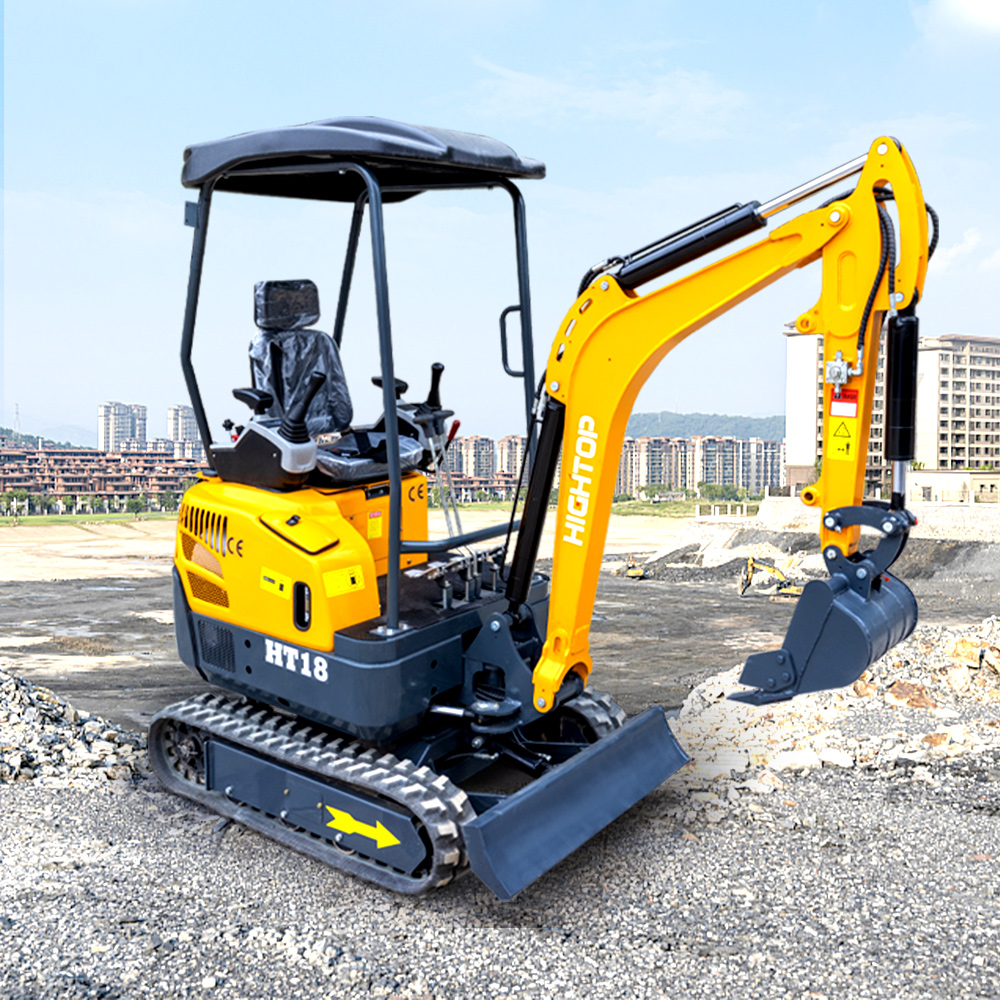
The defining feature of a Mini Crawler Excavator is its low center of gravity and massive ground contact area. A Mini Excavator on tracks distributes its weight over a much larger surface area than a wheeled counterpart. This results in significantly lower ground pressure—often as low as 28-35 kPa (kilopascals) compared to the higher pressure points of tires.
If your projects involve uneven terrain, loose gravel, steep slopes (over 30 degrees), or muddy wetlands, the Mini Crawler Excavator is your only safe option. The tracks act as a stable platform, allowing this type of Mini Excavator to lift heavier loads over the side without tipping.
For landscapers, a Mini Excavator with rubber tracks is a game-changer. The Mini Crawler Excavator can traverse finished lawns and sensitive garden areas with minimal turf damage compared to the ruts tires might leave in soft soil. This "tread lightly" capability is why the Mini Crawler Excavator remains the top choice for residential contracts.
Generally, a Mini Crawler Excavator translates more of its engine power into breakout force. Because the undercarriage is anchored firmly to the ground, the Mini Excavator does not waste energy stabilizing itself. When you need a Mini Excavator to tear through frost or compacted clay, the crawler variant usually offers a 10-15% advantage in raw digging efficiency.
The Small Wheel Excavator is often the misunderstood underdog in the North American market, though it dominates in Europe. As urban construction sites become more spread out, the unique advantages of this Mini Excavator variant are becoming impossible to ignore.
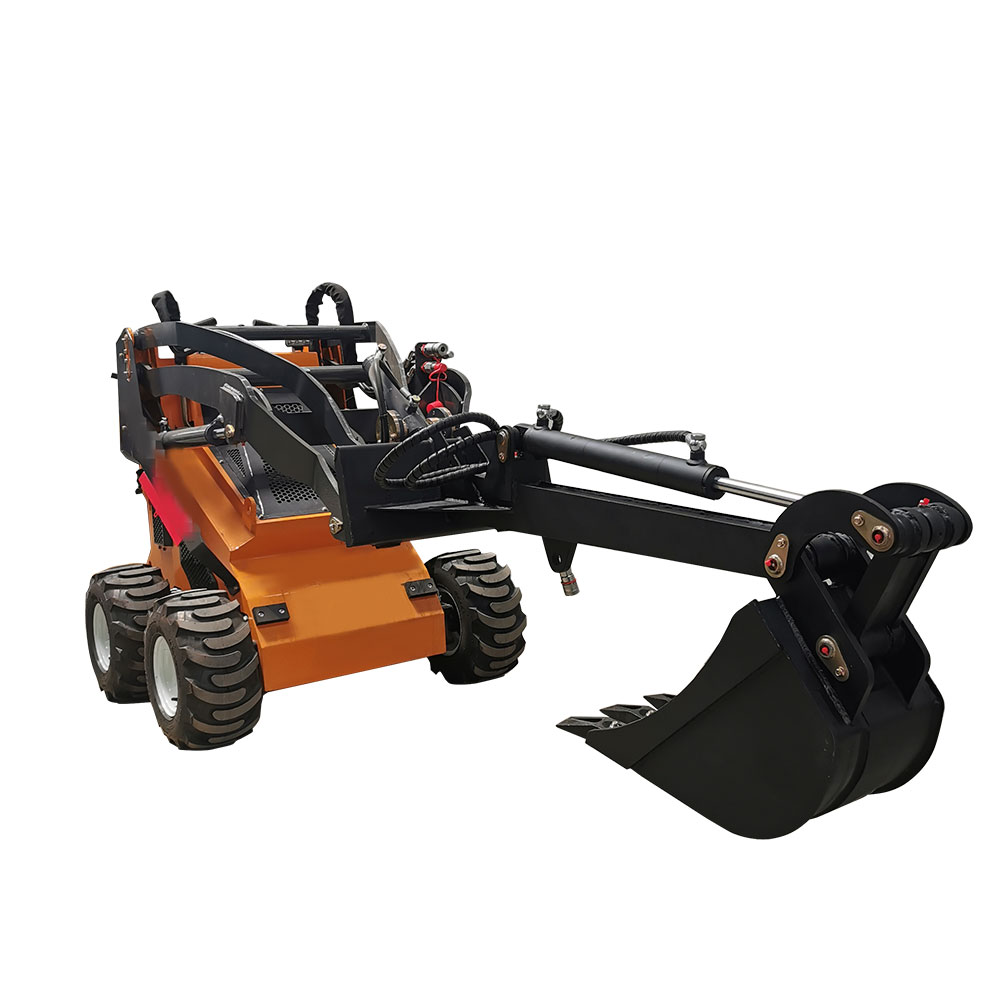
The most significant data point for a Small Wheel Excavator is travel speed. While a tracked Mini Excavator crawls at a sluggish 4–6 km/h, a Small Wheel Excavator can hit speeds of up to 30 km/h (approx. 19 mph).
This speed difference fundamentally changes logistics. If your work involves moving between job sites 5 miles apart, a Mini Crawler Excavator requires a truck and trailer, loading time, and CDL drivers. A Small Wheel Excavator, however, simply drives there. For municipal projects and road maintenance, this Mini Excavator capability saves thousands of dollars annually in transport costs.
A Small Wheel Excavator is designed for asphalt and concrete. It does not chew up the road surface like steel tracks, and it doesn't wear out as fast as rubber tracks do on abrasive pavement. If 80% of your work is on hard surfaces—parking lots, streets, or driveways—the Small Wheel Excavator is the superior Mini Excavator choice.
The "Achilles' heel" of any tracked Mini Excavator is the undercarriage cost. Replacing rubber tracks, idlers, and sprockets is expensive. A Small Wheel Excavator runs on tires, which are significantly cheaper to replace and last much longer on hard surfaces. This lowers the long-term maintenance TCO (Total Cost of Ownership) for this type of Mini Excavator.
To assist your procurement team, we have compiled a technical comparison. This data highlights where each Mini Excavator excels.
Feature Comparison | Mini Crawler Excavator | Small Wheel Excavator |
Primary Terrain | Mud, Slopes, Loose Soil, Grass | Asphalt, Concrete, Hard-packed Dirt |
Max Travel Speed | 3 - 6 km/h (Slow) | 25 - 35 km/h (Fast) |
Ground Pressure | Very Low (Floats on soft ground) | High (Can sink in mud) |
Stability (Lifting) | High (Best for over-side lifting) | Moderate (Requires stabilizers/outriggers) |
Maintenance Cost | High (Undercarriage parts) | Low (Tires & Axles) |
Transport Method | Trailer/Low-loader Required | Self-drive (Road Legal in many zones) |
Breakout Force | Excellent (Anchored traction) | Good (Dependent on stabilizers) |
Resale Value | Very High (Universal demand) | Moderate (Niche demand) |
Every Mini Excavator has a sweet spot. To maximize your ROI, you must align the machine choice with your dominant application.
If your business focuses on digging swimming pools, trenching backyards, or clearing brush, the Mini Crawler Excavator is the correct Mini Excavator for you. The risk of getting a wheeled machine stuck in a muddy backyard is too high. Furthermore, the compact width of a tracked Mini Excavator (often with retractable tracks) allows it to squeeze through garden gates that a Small Wheel Excavator could never fit through.
For contractors laying fiber optics or repairing water mains in the city, the Small Wheel Excavator is the ultimate Mini Excavator. You can finish a job on 5th Street, drive this Mini Excavator to 12th Street, and start digging immediately without waiting for a low-boy trailer. The ability to work on pavement without using protective mats makes the Small Wheel Excavator a favorite for city councils.
In demolition, stability is key. A Mini Crawler Excavator provides a solid base for using hydraulic breakers and shears. However, if the demolition is inside a large warehouse with concrete floors, a Small Wheel Excavator might be preferred to protect the floor slab and move quickly between debris piles. Ultimately, the Mini Crawler Excavator usually wins here due to the aggressive nature of falling debris which can puncture tires.
When buying a Mini Excavator, the purchase price is only the beginning.
Fuel Efficiency: Generally, a Small Wheel Excavator consumes slightly less fuel during travel but similar amounts during digging. However, because it eliminates the need for a haul truck for short moves, the fleet fuel consumption drops.
Maintenance: A Mini Crawler Excavator will typically cost $1,500–$3,000 every 1,500 hours for track replacement. In contrast, a Small Wheel Excavator set of tires can last 3,000+ hours on proper surfaces, costing significantly less.
Resale: The used market for the Mini Crawler Excavator is massive. You will likely recoup 60-70% of your investment after 5 years. The Small Wheel Excavator is more niche; it may take longer to sell, though it commands high prices in specific regions where they are scarce.
The Mini Excavator is the backbone of modern construction. If your work takes you off-road, into the mud, and onto the slopes, the Mini Crawler Excavator is the machine you need. It is the safe, stable, and powerful choice for the majority of earthmoving tasks.
However, if you operate in the "concrete jungle," the Small Wheel Excavator offers a competitive edge that no tracked machine can match: speed. By eliminating transport downtime, the wheeled Mini Excavator can complete more jobs in a single day.
Analyze your job sites. Look at your soil conditions. Whether you choose the rugged Mini Crawler Excavator or the agile Small Wheel Excavator, ensure your Mini Excavator is equipped with the right attachments to maximize its potential.
Generally, a Small Wheel Excavator has a slightly reduced digging depth compared to a similar-sized Mini Crawler Excavator. This is because the wheeled undercarriage sits higher off the ground, raising the center of gravity and the boom pivot point. However, for most utility trenches (up to 3 meters), both Mini Excavator types are more than capable.
This depends entirely on your local jurisdiction. In many regions, driving a Small Wheel Excavator on public roads requires a standard driver's license plus a specific heavy equipment endorsement or "Roading" permit. Unlike a Mini Crawler Excavator which is never road-legal, the wheeled Mini Excavator must also have lights, mirrors, and turn signals to be compliant.
The Mini Crawler Excavator is typically superior for lifting. Its heavy tracks act as a counterweight, and the wide footprint provides a stable platform without needing to deploy outriggers. A Small Wheel Excavator can lift heavy loads, but it must have its stabilizers (outriggers) and dozer blade firmly planted on the ground to be safe, which adds setup time.
On a Mini Crawler Excavator, rubber tracks typically last between 1,200 and 1,600 hours depending on the terrain (rocky ground cuts this life short). In comparison, high-quality industrial tires on a Small Wheel Excavator can last upwards of 3,000 to 5,000 hours if used primarily on concrete and asphalt, making the wheeled Mini Excavator cheaper to maintain in the long run.
Yes, in most cases. If both the Mini Crawler Excavator and the Small Wheel Excavator share the same weight class (e.g., both are 6-ton machines) and use a standard quick coupler (like a Pin Grabber or S-type coupler), the buckets, breakers, and augers are interchangeable. This versatility is a key benefit of the Mini Excavator ecosystem.


